
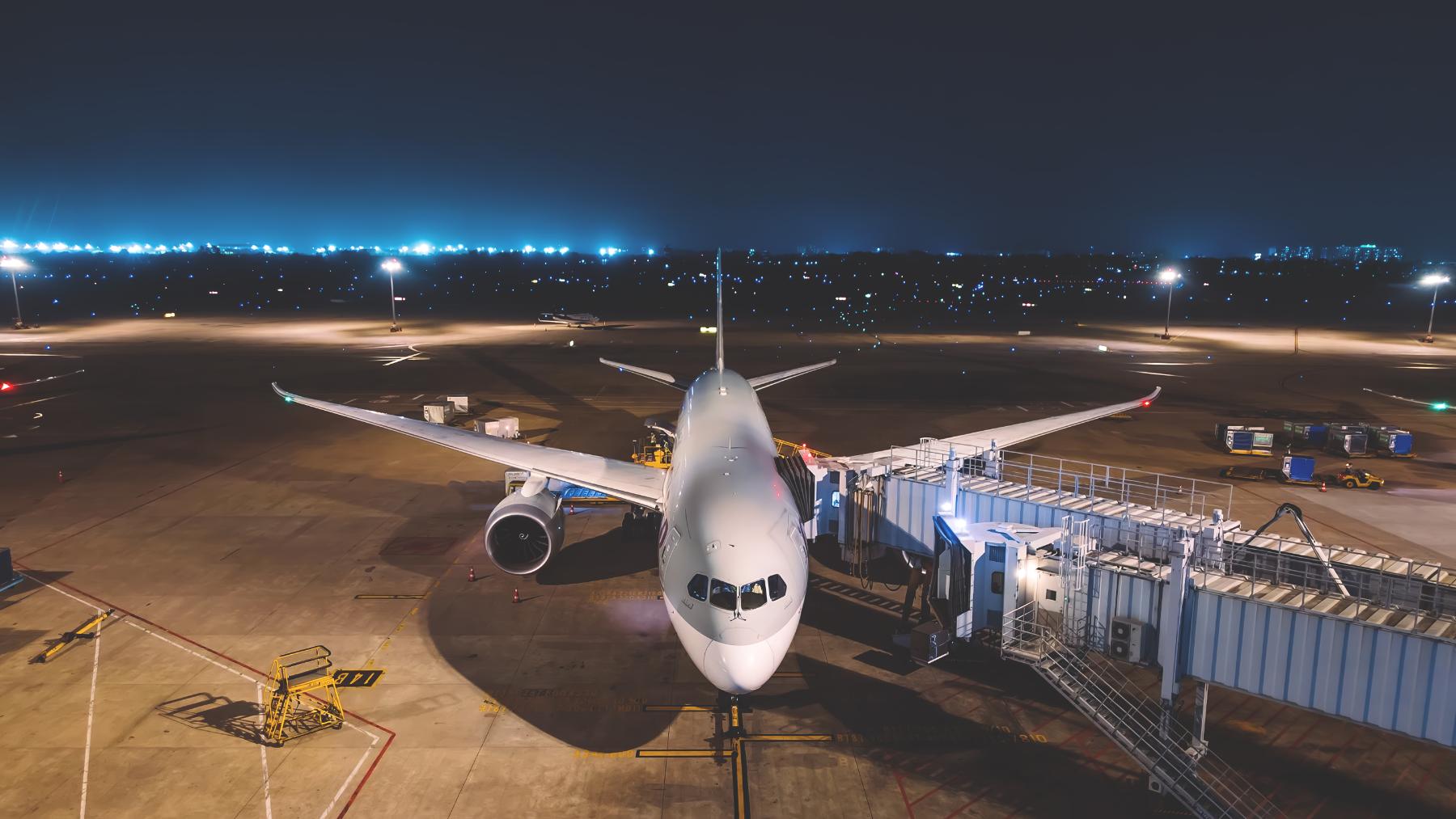
Type Widebody Airliner
Boeing 787 Dreamliner
The 787 rewrote the widebody formula: a composite airframe that shrugs off fatigue cycles, engines efficient enough to make long thin routes profitable, and a cabin pressurized lower and humidified higher than anything before it. United and American fly large 787 fleets, and the type opened city pairs that never justified a jumbo.
Crews notice the quiet flight deck, the head-up displays, and the electric architecture that replaced pneumatic plumbing across the airplane. Passengers notice the enormous windows. Schedulers notice that the airplane makes fifteen-hour missions routine, which reshapes what a widebody pilot's month looks like.
- Seats
- Around 240 to 330
- Engines
- Two GEnx or Trent 1000
- Cruise
- Mach .85 class
- Range
- Over 7,000 nm
- Deck
- HUD-equipped fly-by-wire Boeing
- Role
- Modern long-haul seat
Representative figures for the type. Model year and configuration move the numbers.
The Seat It Represents
Like every widebody, the 787 is a seniority purchase: years on narrowbodies come first, then the bid to international flying. What the Dreamliner adds is route variety. Long thin flying means more destinations and fewer megahubs, so 787 pilots collect layover cities the 747 generation never saw.
The augmented-crew rhythm, bunk rest, oceanic procedures, arrival fatigue management, is the daily texture. Pilots who love geography bid it and stay; pilots who prefer home every night bid domestic and keep the seniority for schedule power instead.
Student Questions, Answered
How is the 787 different to fly than the 777?
Same Boeing philosophy, newer generation: head-up displays as standard tools, electric systems in place of bleed air, and fly-by-wire tuned to feel conventional. Crews transition between them regularly; the mission profiles differ more than the handling.
Which US airlines should a future 787 pilot watch?
United operates one of the largest Dreamliner fleets anywhere and keeps ordering; American flies it across both oceans. Fleet plans shift, so treat the airline's orderbook as part of your seniority math.
Does the composite airframe change anything for pilots?
Operationally it shows up as capability: higher cabin comfort for crews on long missions and an airframe designed for the fatigue life long-haul schedules demand. The flying remains the flying.
Where It Fits On Your Path
The modern face of the same summit the 777 represents: proof that the ladder from a $150-an-hour trainer genuinely ends somewhere worth the climb.
Long, Thin, and New
The Dreamliner's route strategy rewrote airline maps: efficiency good enough to make long, thin city pairs profitable meant nonstops between secondary cities that never justified a jumbo, and airlines built entire international expansions around that math. For crews the strategy translates into variety, more destinations, fewer megahub repeats, and schedules built on ultra-long-haul patterns with augmented crews and managed rest.
The airframe's composite construction pays passengers and crews directly: cabin pressure held at lower altitude and higher humidity than metal airplanes tolerate, which is why fifteen-hour 787 arrivals feel different, a fact crews confirm enthusiastically. United's Dreamliner fleet ranks among the world's largest and keeps growing, American flies it across both oceans, and the type's order book stretches years, meaning the seats will exist when today's students reach widebody seniority. As motivation posters go, this airplane is a rational one.
Inside the airlines, the 787 has developed an interesting bidding culture: relatively junior pilots sometimes reach its right seat faster than the classic widebody ladder suggested, because rapid fleet growth keeps opening new positions and new bases faster than seniority can settle around them. Growth fleets are opportunity fleets; every delivery is a fresh set of seats, and pilots who track their airline's orderbook bid accordingly. For a student reading this years out, the takeaway isn't the specific airplane, it's the habit: airline careers reward people who read fleet plans the way investors read earnings, and the Dreamliner's long order backlog is precisely why it belongs in your career math rather than just on your wall. Learn to read those signals early and every bid you ever make gets smarter.
Related Aircraft
Train Toward This Flight Deck
Get matched with schools whose fleets and airline pipelines point at the seat you want.