
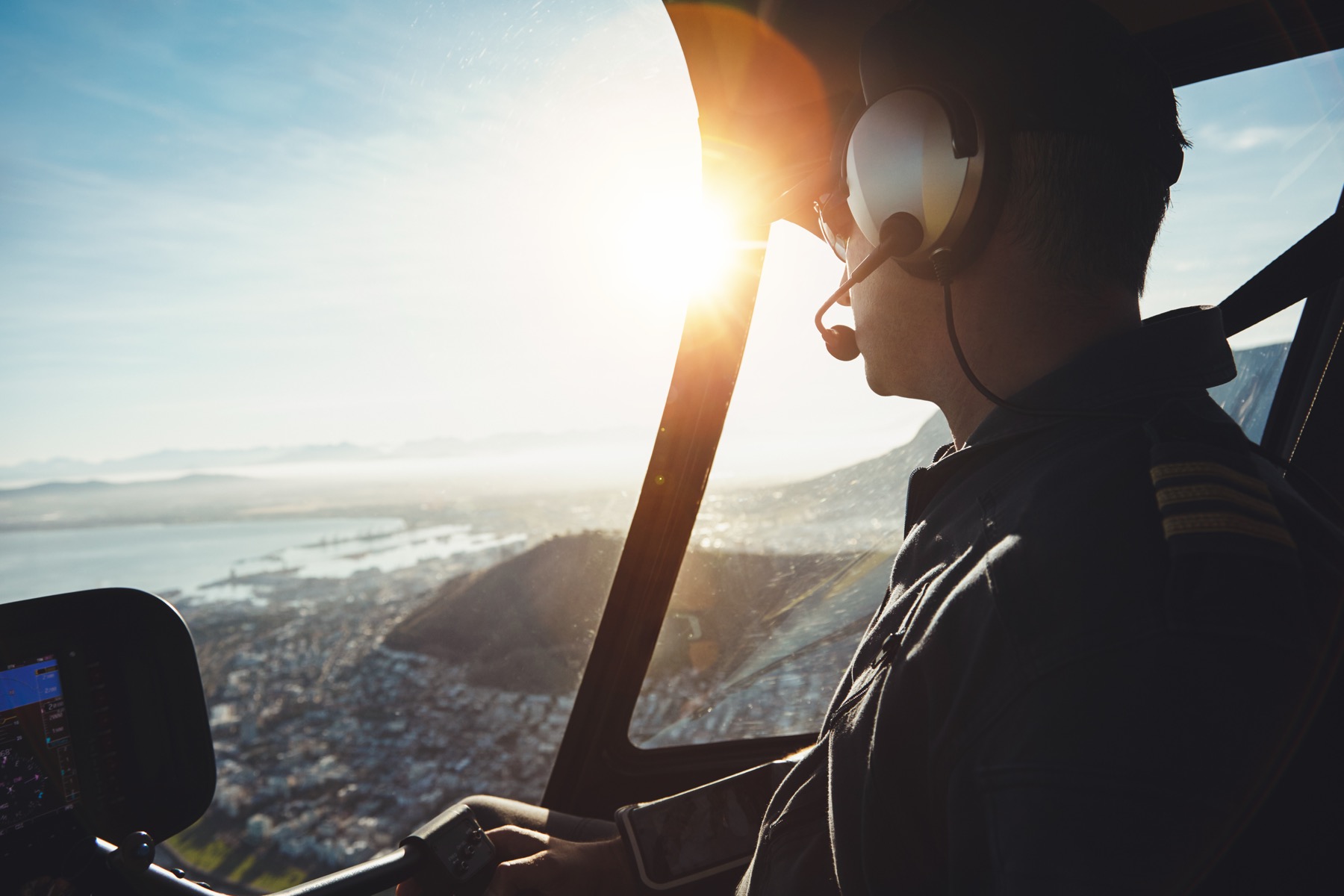
Rotor The Vertical Trade
Helicopter PilotCareers
Everything on this site about airplanes has a parallel universe with the wings on top, and the two worlds barely overlap: different aircraft, different employers, different economics, and a job list airplanes can't touch, hovering over hospital rooftops, oil platforms, powerlines, and film sets. Here's the rotor career, mapped with the same honesty as everything else we publish.
The Money Conversation, First for Once
Rotor training costs more per hour than airplane training, a lot more, because helicopters cost more to buy, feed, and maintain. Where an airplane student rents a trainer for under $200 an hour, a Robinson R22, the two-seat piston trainer that dominates the civilian market, commonly runs $300-plus wet with an instructor, and the road from zero to a commercial certificate with instructor ratings typically lands somewhere between $85,000 and $115,000. The consolation: the certificate mathematics are shorter. Helicopter commercial minimums under Part 61 sit at 150 hours rather than the airplane's 250, and rotor careers don't run through a 1,500-hour airline gate; they run through insurance minimums that turbine operators set themselves, commonly around 1,000 hours of PIC for the first real turbine seat.
The Ladder: Robinson to Turbine
The civilian path is remarkably standardized. Train in R22s, earn the commercial and CFI, then teach in R22s and R44s until the logbook clears the magic 1,000-hour neighborhood, exactly the instructing bridge airplane pilots walk, at rotor prices and rotor pay. From there the trade forks into the turbine world: the Bell 206 and 407, the Airbus AS350 family, and upward. First turbine jobs cluster in tours, the Grand Canyon and Hawaii fleets hire hard every season, in utility work, and in the Gulf of Mexico's offshore oil shuttle, historically the industry's great hour-building employer. Note the pattern nobody skips: rotor careers are built on instructing too, so the CFI chapter applies here with the serial numbers changed.
The Jobs at the Top
EMS and air ambulance is the trade's emotional summit: single-pilot IFR into hospital pads at 2am, mission-driven crews, and experience minimums to match, commonly 2,000-plus hours with real night and instrument time. Offshore energy flies crews to platforms on schedules, the closest rotor life comes to an airline rhythm. Utility and longline work, powerline patrol, logging, external loads, precision agriculture, pays for hands that can hold a hover with a load swinging a hundred feet below. Fire runs buckets and helitack crews all summer alongside the tanker world. Tours employ more entry-turbine pilots than anything else, and news, film, and law enforcement round out a job board airplane pilots simply don't have. Pay at the experienced end is genuinely competitive: senior EMS, offshore, and utility captains earn six figures, and the perpetual churn of pilots leaving for those seats keeps the entry pipeline hungry.
Should You Pick Rotor or Fixed-Wing?
The honest sorting questions: if your dream is airline-scale machines, international layovers, and the seniority escalator, that world belongs to airplanes, and rotor-to-airline transitions are expensive detours. If the appeal is flying as a hands-and-feet craft, missions that change daily, and offices that hover, the rotor trade delivers a career airplanes cannot imitate. Budget honestly, because rotor training debt against rotor entry pay demands the same discipline we preach on the financing page, and the scholarship world (Whirly-Girls and Helicopter Association International programs among them) is smaller but real. Dual-rated pilots exist and love it; wallets that can do both in sequence usually start where the career goal lives.
The Bottom Line
- Cost to Career
- Roughly $85,000 to $115,000 to commercial-CFI; shorter hour minimums, pricier hours.
- The Bridge
- Instructing in Robinsons to about 1,000 hours, then turbine tours, offshore, or utility.
- The Ceiling
- EMS, fire, offshore, and utility seats with six-figure pay and no age-65 airline clock.
Rotor schools are rarer than airplane schools, which makes the directory search worth widening; several listed academies, including Hillsboro Aero Academy, run dedicated helicopter tracks alongside fixed-wing. Tell the matcher you're rotor-curious and we'll flag the programs that actually fly them.

The Vertical Career Starts at a Hover
Get matched with schools flying real rotor programs, costs and ladders mapped honestly.