
Fire The Emergency Trade
Aerial FirefightingCareers
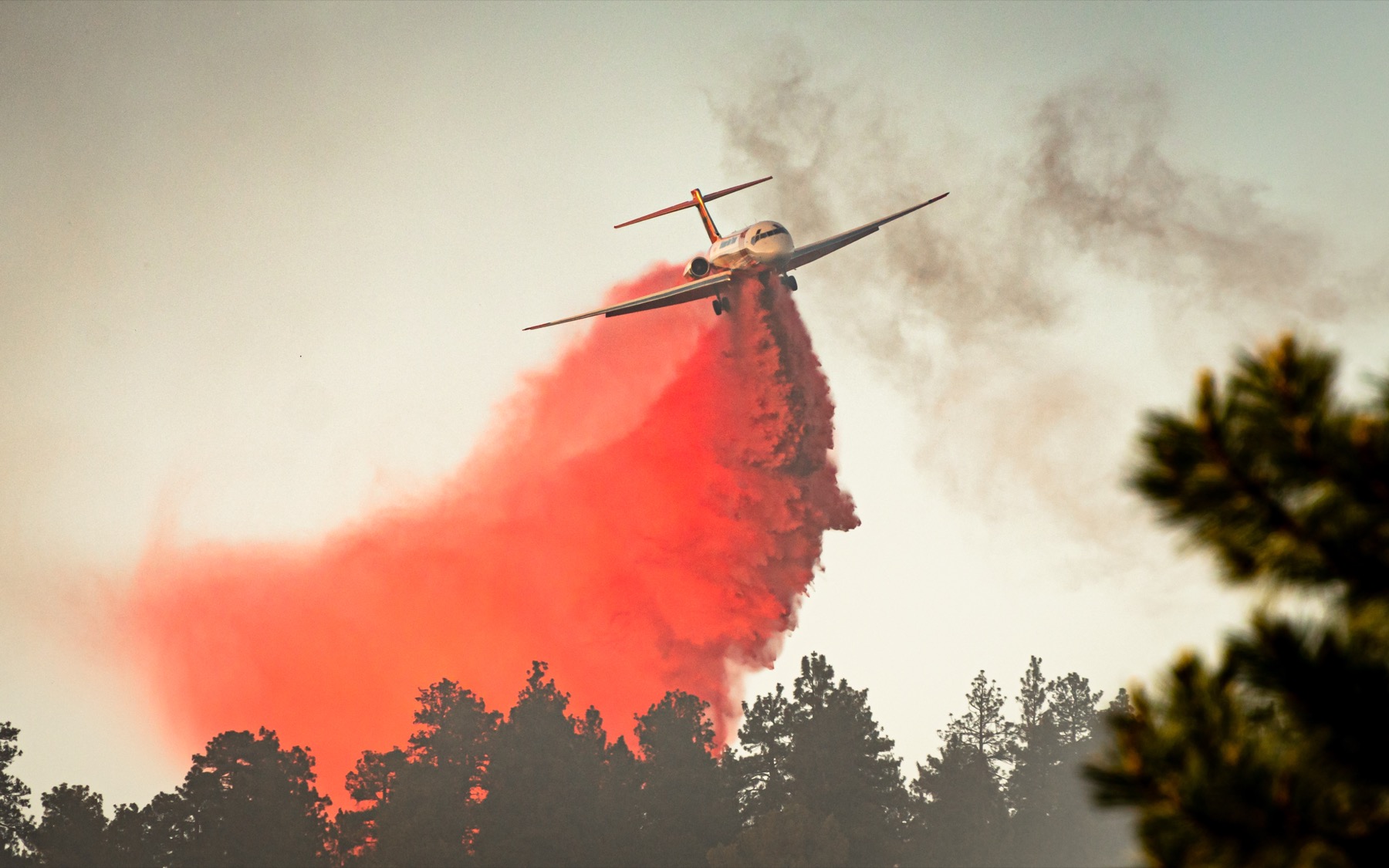
Red retardant against grey smoke is the most dramatic image in working aviation, and the pilots who paint it are the trade's most experienced hands. This is not an entry-level path; it's a summit with several established routes up, and the honest map of those routes is what this page is for.
The System: Who Actually Flies a Fire
A wildfire's airspace is an organized machine, and each aircraft in it is a different job. Highest and steadiest is air attack, a supervisor circling in an OV-10 or turboprop twin, directing the show beside an agency specialist. Below them work the large air tankers, converted airliners and freighters, BAe-146s, MD-87s, C-130s, the DC-10 that drops a swimming pool of retardant in one pass, flown by two-pilot crews on federal contracts. The single engine air tankers, SEATs in the trade's vocabulary, are Air Tractor 802s carrying 800 gallons into terrain the big tankers can't thread. Scoopers, the CL-415 family, skim lakes and drop water in cycles measured in minutes. Lead planes fly the drop line ahead of the tankers to show them the run. And a helicopter ecosystem of buckets, tanks, and crew ships works alongside all of it. Fixed-wing students should aim first at the SEAT and lead-plane world; it's the widest fixed-wing door.
The Requirements, Stated Plainly
Fire flying is contracted to private operators by federal and state agencies, and the agencies set pilot minimums through their carding process: an interagency pilot qualification card is your license to work a fire, issued after records review and a check flight with agency inspectors. The floors are steep. SEAT carding generally wants 1,500 hours of PIC-heavy flying with substantial low-level and typically ag experience behind it; tanker seats want thousands of hours, turbine and heavy time, an ATP for many operators, and initial-attack qualification built over supervised seasons. Nobody cards a 300-hour pilot, and the trade is proud of that; the fire environment, smoke, terrain, converging aircraft, and adrenaline, spends experience like fuel.
The Three Routes Up the Mountain
Route one is agricultural aviation, and it's the classic SEAT pipeline: the same Air Tractor airframes, the same low-level discipline, the same seasonal rhythm. An ag pilot with a few thousand hours of swath runs is the most natural fire hire in aviation, and many fly crops in June and fires in August for the same operator. Route two is the utility and mountain track: pipeline patrol, backcountry charter, bush freight, anything that stacks PIC hours in wind and terrain; lead-plane and air-attack seats draw from this pool. Route three is the military and heavy-iron track into the large tankers, where ex-C-130 and airline pilots convert their transport experience to retardant work. Students can't shortcut any of these, but they can choose a first career that doubles as fire preparation, which is exactly how working tanker pilots describe their own paths.
The Operators and the Season
The employer list is short and storied: Neptune Aviation in Missoula flying BAe-146s; 10 Tanker with the DC-10s; Aero-Flite with scoopers and RJ85s; Bridger Aerospace's Super Scoopers out of Bozeman; Erickson and Coulson in the heavy world; and dozens of SEAT operators contracting Air Tractors across the West and South. Work follows the fire calendar: exclusive-use contracts base a crew somewhere from June through September, while call-when-needed contracts activate aircraft as the situation demands, and busy seasons blur both into months of eleven-days-on rotations. Duty is day VFR with hard sunset cutoffs, agency flight-hour limits, and mandatory days off, structure written in the hard lessons of a trade that used to burn its people out. Off-season, crews train, maintain, and increasingly chase southern-hemisphere contracts in Australia and Chile.
The Bottom Line
- Entry Reality
- No entry-level seats exist. The trade hires proven low-level and heavy pilots, mostly from ag, utility, and military flying.
- The Pipeline
- Ag aviation to SEATs is the established fixed-wing route; plan it from your commercial certificate forward.
- The Reward
- Seasonal pay competitive with airline flying, missions that matter visibly, and membership in aviation's tightest guild.
Planning Backward From the Fire Line
A student who wants this life should write the sequence on the wall: commercial certificate with instrument rating, tailwheel endorsement immediately, an ag school winter and a loader season by the second year, a spray seat by year three or four, and a SEAT card application when the logbook crosses the agency floors with low-level hours to spare. That's a five-to-eight year arc, faster than most airline captains reach a widebody, toward a seat maybe two thousand pilots in America hold. The alternative arcs run through mountain charter or the military. All of them start at the same place every other path on this site starts: a school with honest airplanes and instructors who take low-level discipline seriously, ideally in fire country itself, Montana, Idaho, California, Oregon.
Every Tanker Pilot Started at Lesson One
Get matched with a school and point the whole ladder at the fire line.