
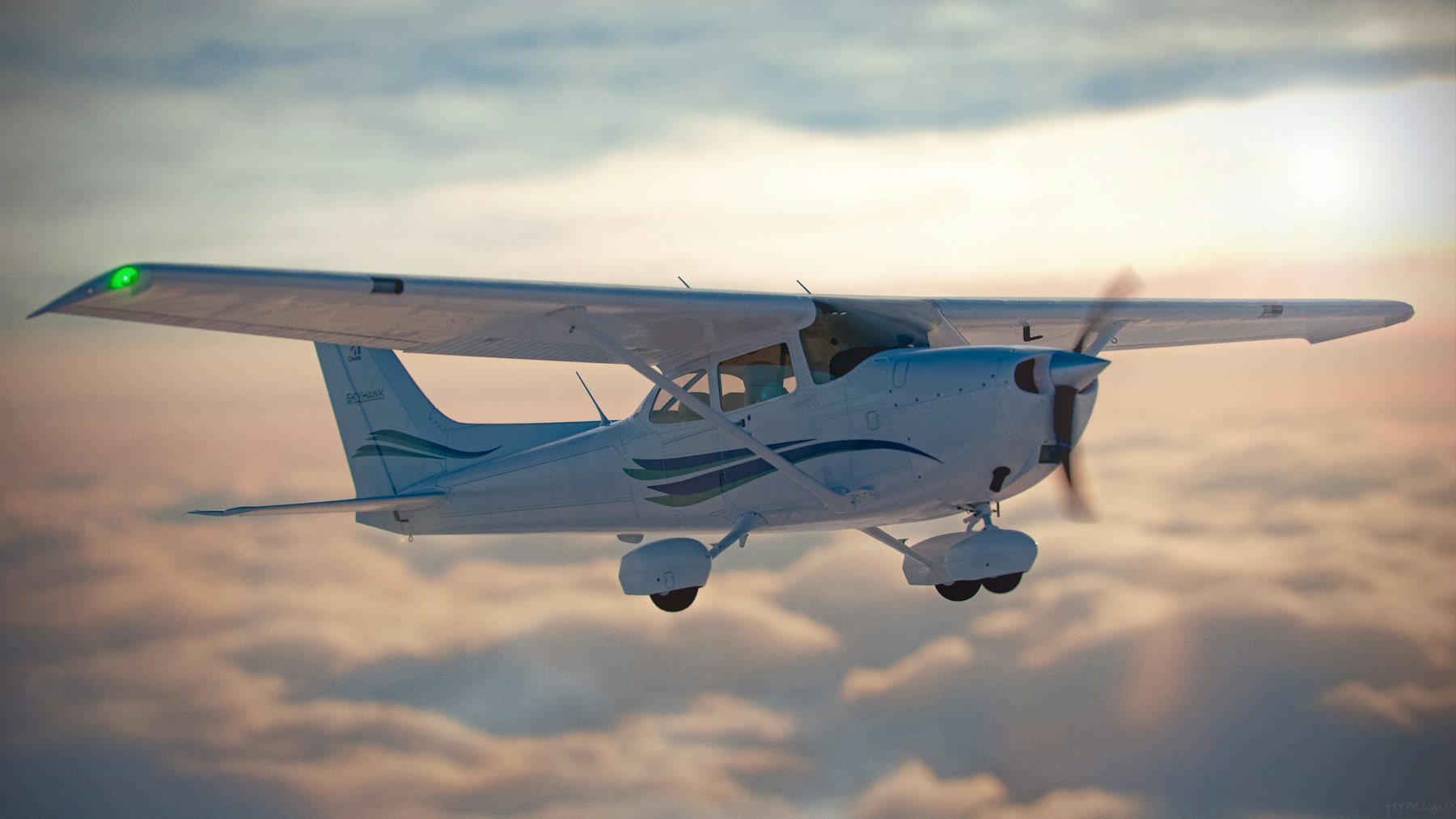
Type Primary Trainer
Piper Archer
The Archer is the other half of America's primary training fleet, and the schools that run it tend to be evangelists. Where the Cessna sits you under a high wing, the Archer puts the wing below you, the same sight picture every jet you'll ever fly uses, and its stabilator gives pitch control a smooth, connected feel students notice on day one.
The PA-28 family has trained pilots since the 1960s, and current Archers roll out of the factory with Garmin glass panels. Academies like it for standardization: big fleets of identical airplanes keep scheduling dense and checkouts simple.
- Seats
- 4
- Engine
- Lycoming, 180 hp
- Cruise
- About 125 knots
- Range
- Around 500 nm
- Panel
- Garmin glass in new builds
- Role
- Private through CFI
Representative figures for the type. Model year and configuration move the numbers.
What Flying One Teaches You
Low-wing flying teaches fuel management discipline early: you'll switch tanks deliberately instead of pulling from both at once, a habit that scales up. Ground handling is planted and crosswinds feel manageable, and the landing flare rewards a stabilized approach, which examiners notice on checkride day.
Rental pricing tracks the 172 closely, so choosing between them usually comes down to which school runs the tighter operation. Fly both once if you can; your hands will tell you which cockpit fits.
Student Questions, Answered
Cessna or Piper: which should I actually train in?
Whichever school runs the better operation. The airplanes are close enough that scheduling density, instructor quality, and maintenance standards should decide it. Fly a lesson in each if both schools pass your checklist, then trust your hands.
Is one tank at a time really harder to manage?
It's a habit, not a hardship. You'll set a timer, switch tanks on schedule, and log the discipline. Instructors like teaching fuel awareness early precisely because the Archer makes it explicit instead of automatic.
Does low-wing visibility make pattern work harder?
Different, not harder. You lose some downward view in turns and gain a cleaner sight picture on final. Since airliners share that geometry, plenty of instructors call Archer time a quiet head start.
Where It Fits On Your Path
Everything the 172 does on your path, the Archer does with a low wing. Plenty of students split time between both and walk into checkrides more adaptable for it.
The Low-Wing Argument
Archer partisans make a practical case: the low wing teaches fuel management honestly, because switching tanks is a deliberate act rather than a both-position afterthought, and that habit transfers directly to complex aircraft and jets. The sight picture in turns, wing below the horizon, matches what students meet later in transport aircraft, and ground effect behavior on landing forces energy management discipline that pays off at the commercial checkride's power-off 180s.
The fleet-standardization story matters more. The country's largest academy chain built its program around Archers, so tens of thousands of working pilots flew their first professional hours in one, and schools that standardize on the type inherit a deep pool of instructors, parts, and institutional knowledge. Rental rates match the 172's range, availability is nearly as universal, and a student who trains in one transitions to anything in the piston fleet in a lesson or two. Choosing between Archer and Skyhawk schools is choosing between equals; choose the school, not the wing position.
The Piper lineage also hands Archer students a smoother ladder inside the brand. Schools that fleet Archers often keep an Arrow for the commercial certificate's complex-airplane work and Seminoles for the multi rating, so the cockpit layout, fuel logic, and switch positions stay familiar while the systems grow: same family, bigger siblings. Students notice the compounding: transitions that cost strangers five orientation flights cost Piper-raised pilots two, and at academy rental rates that difference is real money. It's worth asking any Archer school what the rest of their fleet looks like, because a matched Piper ladder from first lesson to multi checkride is one of those quiet structural advantages that never appears in the brochure price but shows up in the total.
Related Aircraft
Train Toward This Flight Deck
Get matched with schools whose fleets and airline pipelines point at the seat you want.