
Showtime Flying as Hospitality
Air Tours andGuide Flying
Somebody has to land tourists on that glacier, narrate the Grand Canyon at sunrise, and circle Manhattan while a proposal happens in the back seat. Tour flying is the corner of commercial aviation where the flying is half the job and the showmanship is the other half, and it hires at hour counts fresh commercial pilots actually have.
A Saturday on the Schedule, Denali Season
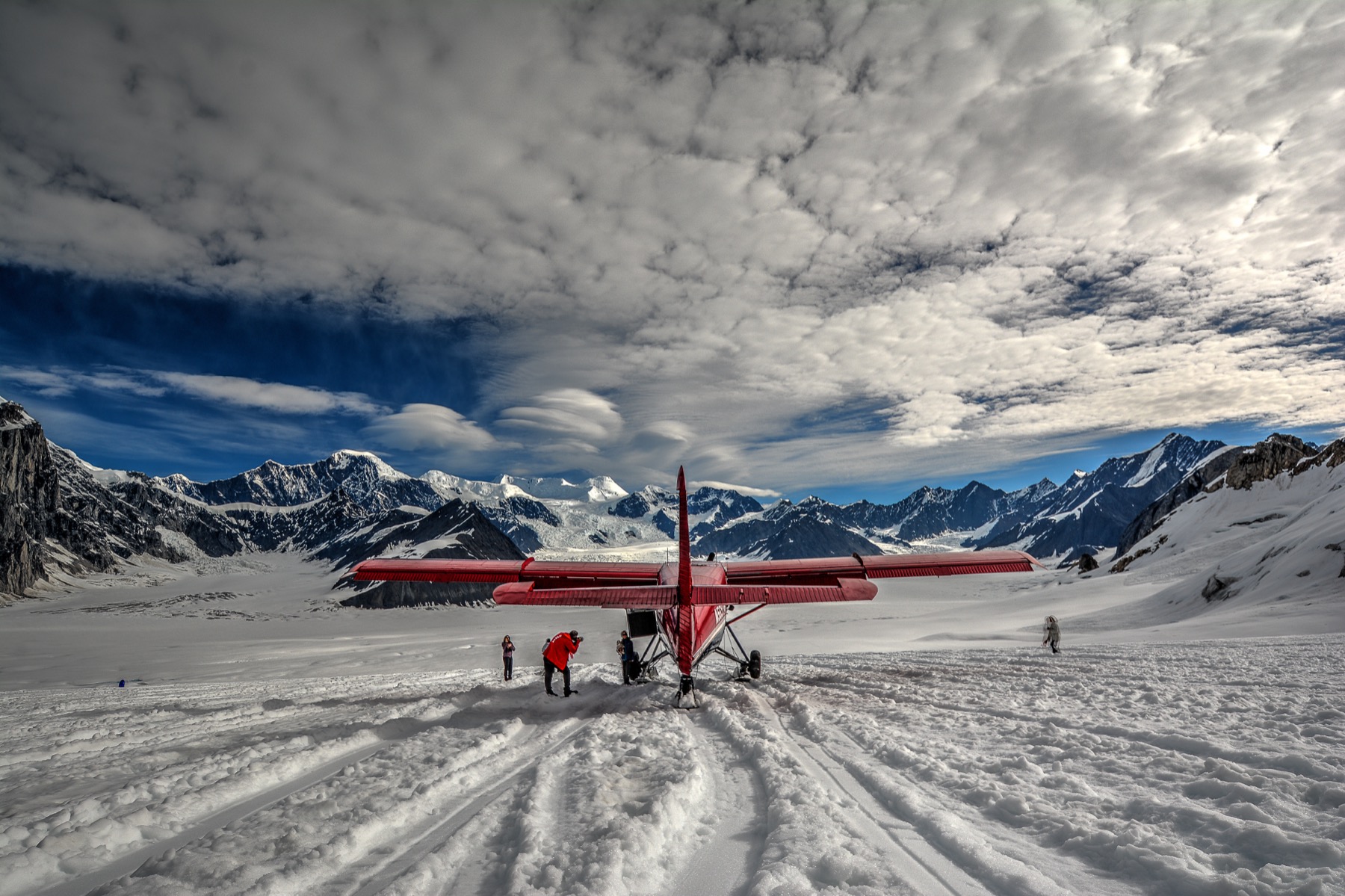
Take a real workday at a Talkeetna flightseeing operator, because the rhythm tells you more than any job description. 0700: weather call with the chief pilot; the mountain is out, which means a full book. 0800: first load of four, the one-hour Denali circle; you narrate the Ruth Gorge over the intercom while watching a Beaver two thousand feet below work the same valley. 0930: glacier landing trip; skis on the Sheldon Amphitheater, engines running, eight minutes of passengers crunching snow and losing their minds at the silence. 1130: third load, German honeymooners, you've learned "links" and "rechts" for wing-side calls. 1300: fuel, sandwich, help the loader reweigh the afternoon manifest because a family of five showed up heavier than booked. 1400 and 1600: two more circles, building cumulus pushing the route west. 1800: last load cancels on cloud; you log 6.1 hours of mountain flying somebody paid YOU for. Multiply by a hundred summer days and that's the season: 500-plus hours of the most scenic time-building in the industry.
Where This Trade Lives
Tour flying concentrates where geography sells tickets. The Grand Canyon corridor out of Las Vegas and Tusayan is the volume king, fixed-wing and helicopter fleets flying the same charted routes under the canyon's special flight rules airspace, which exists specifically because tour traffic got thick enough to need its own traffic system. Alaska runs the premium end: Denali flightseeing from Talkeetna, glacier landings, and Misty Fjords floats out of Ketchikan timed to cruise ship gangways. Hawaii's Na Pali coast and volcano flights, Sedona's red rocks, Niagara, Nashville and New York skyline circuits, Florida beach banners-and-biplanes: every tourist economy with a view supports operators, which means the jobs follow the calendar around the country. Plenty of tour pilots chain seasons: Alaska summers, desert winters.
The Rules of the Room
Commercial air tours run under their own slice of regulation, 14 CFR Part 136, layered on top of either Part 91 within 25 miles of the departure airport under an FAA Letter of Authorization, or full Part 135 for the bigger operations. What that means practically for a new hire: drug and alcohol testing programs, life preservers over water, floats-or-shore rules for single-engine over-water legs, and route and altitude discipline that gets audited. The National Parks add overflight rules of their own. None of it is burdensome once trained, and knowing the Part 136 framework cold in an interview marks you as a professional among applicants who assumed tour flying was just sightseeing with a certificate.
Getting Hired at 250 Hours
Here's why this page matters to a student: tour operators are among the few employers who genuinely hire at fresh-commercial hour counts. A 250-hour commercial pilot with a clean checkride record can land a right-seat or single-pilot tour job that instructors twice their hours would envy for the flying involved. Operators care about three things beyond the certificate. First, local knowledge or the aptitude to build it fast, because passengers ask about every ridge and river. Second, the medical-and-paperwork cleanliness their insurance demands. Third, and biggest: personality. You are the cruise director, the safety briefer, the photographer's assistant, and the voice in eight headsets for six flights a day. Operators hire baristas-turned-pilots over silent aces, and tips, which are real money in this trade, follow the narration, not the landings.
The Craft Nobody Teaches in Ground School
Working tour pilots develop a skill set no checkride measures. Smoothness above all: your passengers judge the whole flight by whether their stomachs noticed the turns, so tour pilots fly like the coffee is always full. Narration timing: the story of the gold mine below has to land between radio calls, and the best pilots script their route like a walking tour. Camera awareness: you learn to put the subject on the sunny side, slow to best-view speed, and call the shot before it appears. Weather diplomacy: telling six excited tourists the mountain won't be visible today, selling the alternate route honestly, and meaning it. These are hospitality skills wearing a headset, and pilots who master them carry that passenger-sense into every later cockpit; more than one airline interviewer has heard a tour story and leaned in.
Where It Leads
Some pilots pass through on the way to 1,500 hours and the airline path, banking mountain judgment and turbine time when the operator flies Caravans or Otters. Others stay and climb: chief pilot seats, check airman letters, operations ownership; plenty of Alaska tour companies are run by the pilot who showed up for one season twenty years ago. The certificates are the standard ladder, mapped here, with a float rating as the single highest-value add-on for the Alaska and lakes markets. When you tour schools in the directory, ask who has seaplane or mountain courses; states like Alaska, Hawaii, and Nevada sit closest to the jobs themselves.
Get Paid to Fly the Postcard
Get matched with schools near tour country, and ask about float and mountain add-ons from day one.